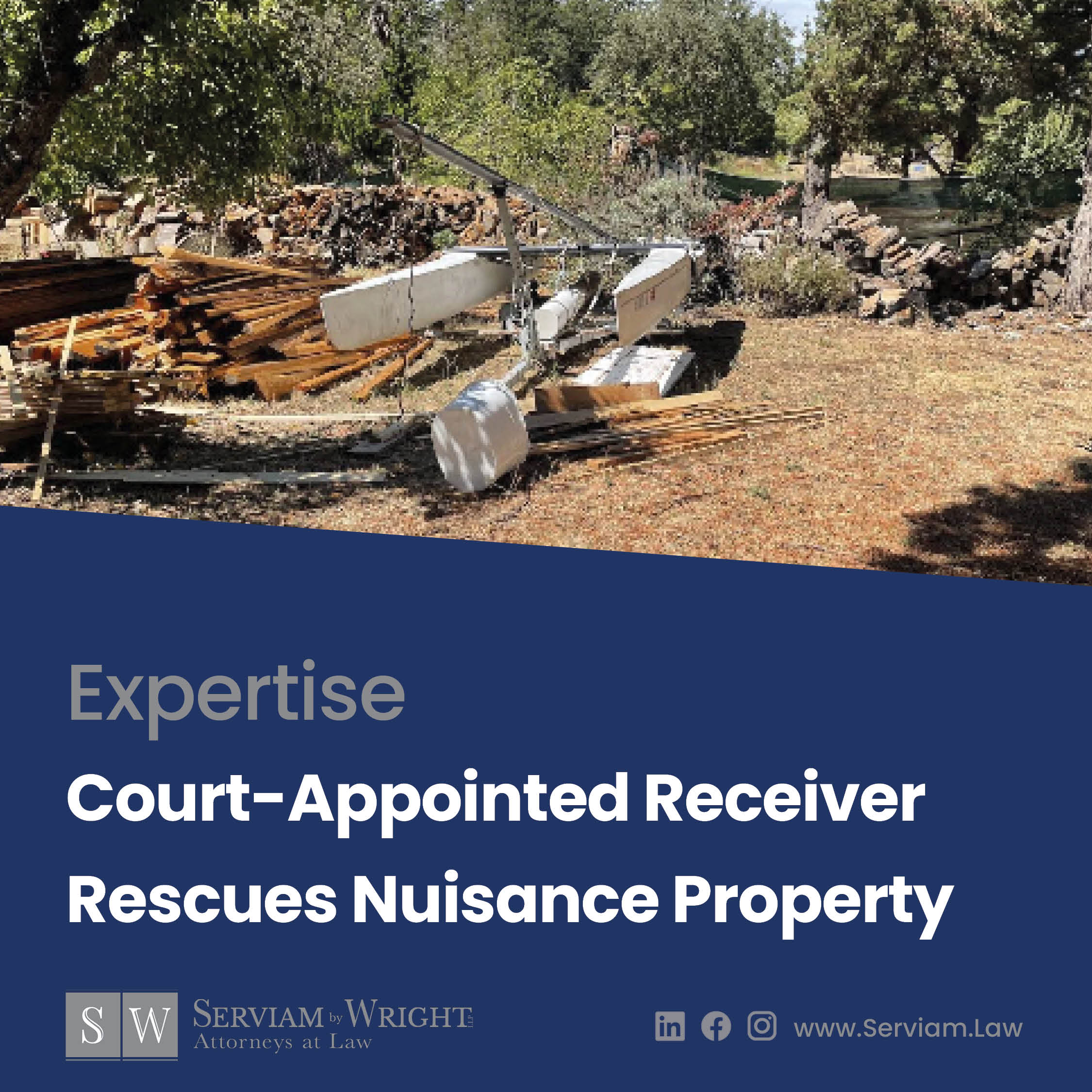
Building violations do not resolve themselves. Left unaddressed, a substandard or dangerous structure becomes a liability—for the occupants, the neighborhood, and the public agency responsible for protecting them. Enforcement requires more than issuing a notice and hoping for compliance. It requires a deliberate legal strategy, matched to the property and the people behind it.
California law gives cities and counties a powerful toolkit for building violation enforcement. The challenge—and the expertise—lies in knowing which tools to use, when to use them, and how to use them in a way that holds up under legal scrutiny. This article outlines the landscape that public agencies navigate every day.
Why Building Violation Enforcement Is Legally Complex
Building enforcement sits at the intersection of multiple bodies of law—state building codes, constitutional due process requirements, nuisance law, civil procedure, and local ordinance authority. A misstep at any stage can expose an agency to legal challenge, delay remediation for months, or result in liability.
The legal framework governing building violation enforcement in California draws from the Health and Safety Code, the Government Code, the Civil Code, the Code of Civil Procedure, and the California Building Standards Code—among others. Each enforcement tool has its own procedural requirements, and the rules governing notice, hearings, and timelines vary depending on the severity of the violation and the urgency of the threat.
Agencies that treat all violations the same—or that default to a single enforcement approach—miss opportunities for faster resolution and create unnecessary legal exposure. Effective enforcement begins with a clear-eyed assessment of the property, the violation, and the responsible party.
Matching the Response to the Situation
Not every building violation calls for the same response. One of the most important distinctions in enforcement practice is understanding why a violation exists. An owner who wants to comply but lacks the resources to do so requires a different approach than one who is capable of compliance and simply refuses.
The most effective enforcement programs are built around this distinction. Collaborative tools—courtesy notices, referrals to assistance programs, extended deadlines—work well for cooperative owners. Coercive tools—administrative fines, criminal prosecution, injunctions—are reserved for those who can comply but won’t. And for properties that cannot be remediated through either approach, California law provides more powerful mechanisms that bypass the owner’s cooperation entirely.
Identifying the right category early is not just good practice—it shapes every procedural decision that follows, including what notice is required, what hearing rights attach, and what remedies are available.
The Building Violation Enforcement Toolkit
California agencies have access to tools that span the full range of administrative, civil, and criminal proceedings. The right combination depends on the property, the violation, and the owner.
Immediate hazard response gives agencies authority to remove occupants from dangerous structures quickly, with due process requirements calibrated to the urgency of the threat.
Abatement orders and warrants allow agencies to perform remediation work directly when an owner fails to act—recovering costs from the responsible party.
Administrative citations and fines are the workhorse of building violation enforcement—imposing escalating monetary penalties through an administrative process, with personal liability for unpaid amounts.
Building code appeals were significantly affected by the 2024 Court of Appeal ruling in Temple of 1001 Buddhas v. City of Fremont, which requires appeals to go to an independent, knowledgeable board—not a staff hearing officer or city council. Many agencies have not yet updated their procedures to comply.
Receiverships are the most powerful tool available for severely blighted or dangerous properties. A court-appointed receiver rehabilitates the property and recovers all costs—including attorney fees—from the property itself, with no abatement liability to the agency. For the right property, it is the most efficient path to complete, lasting resolution.
Due Process: The Thread That Runs Through Everything
Every building violation enforcement action—no matter how urgent, no matter how clear the violation—must satisfy constitutional due process requirements. Notice must be adequate. Hearing rights must be provided. Timelines must be respected.
The specific requirements vary by enforcement tool and by the urgency of the situation. Emergency actions that would not be permissible in routine enforcement become lawful when life safety is at stake—but the legal justification must be documented and defensible. Agencies that shortcut due process do not save time; they create appeals, reversals, and liability.
Getting due process right from the start is what separates enforcement actions that hold up from those that unravel in court.

Cost Recovery: Enforcement That Pays for Itself
California law provides robust mechanisms for agencies to recover the costs of building violation enforcement—including inspection costs, abatement expenses, attorney fees, and litigation costs. When properly structured, enforcement programs can be largely self-funding, with responsible parties bearing the financial consequences of their violations rather than the public.
Cost recovery is not automatic. It requires proper documentation, correct legal procedures, and—in contested cases—skilled advocacy. But for agencies with active enforcement programs, it is an important tool for sustaining those programs without placing the burden on the general fund.
Common Pitfalls in Building Violation Enforcement
Even experienced agencies run into problems. The most common issues we see include:
- Procedural errors that void enforcement actions. Incorrect notice, missed deadlines, or the wrong hearing format can undo months of enforcement work.
- Using the wrong tool for the situation. Agencies that rely too heavily on fines for properties with intractable violations—or that move to coercive tools prematurely for cooperative owners—often get worse outcomes than a more calibrated approach would produce.
- Non-compliant appeals procedures. In the wake of the Fremont decision, agencies that have not reviewed their building code appeals process may be operating outside the law.
- Incomplete cost recovery documentation. Agencies that do not maintain proper records from the outset of an enforcement action often cannot recover costs they were legally entitled to.
- Underutilizing receivership. Many agencies view receivership as a last resort and exhaust years of less effective enforcement before pursuing it—on properties where it would have been the right tool from the beginning.
How Serviam Can Help
Serviam is a municipal and public agency law firm. Building violation enforcement—including nuisance abatement, code enforcement law, receiverships, administrative prosecution, abatement warrants, cost recovery, and hearing officer services—is at the core of what we do.
Our attorneys have handled enforcement actions across the full spectrum: from straightforward administrative citations to complex multi-party receiverships involving severely blighted commercial and residential properties. We understand the legal framework from every angle, and we bring the same depth of expertise whether we are advising on procedure, litigating a contested action, or serving as the court’s receiver.
Public agencies trust Serviam because we do not just know the law—we know how building violation enforcement actually works in practice. We know where enforcement actions break down, and we know how to build them to hold up.
If your agency is managing problem properties—or wants to make sure its enforcement program is legally sound—we are ready to help.